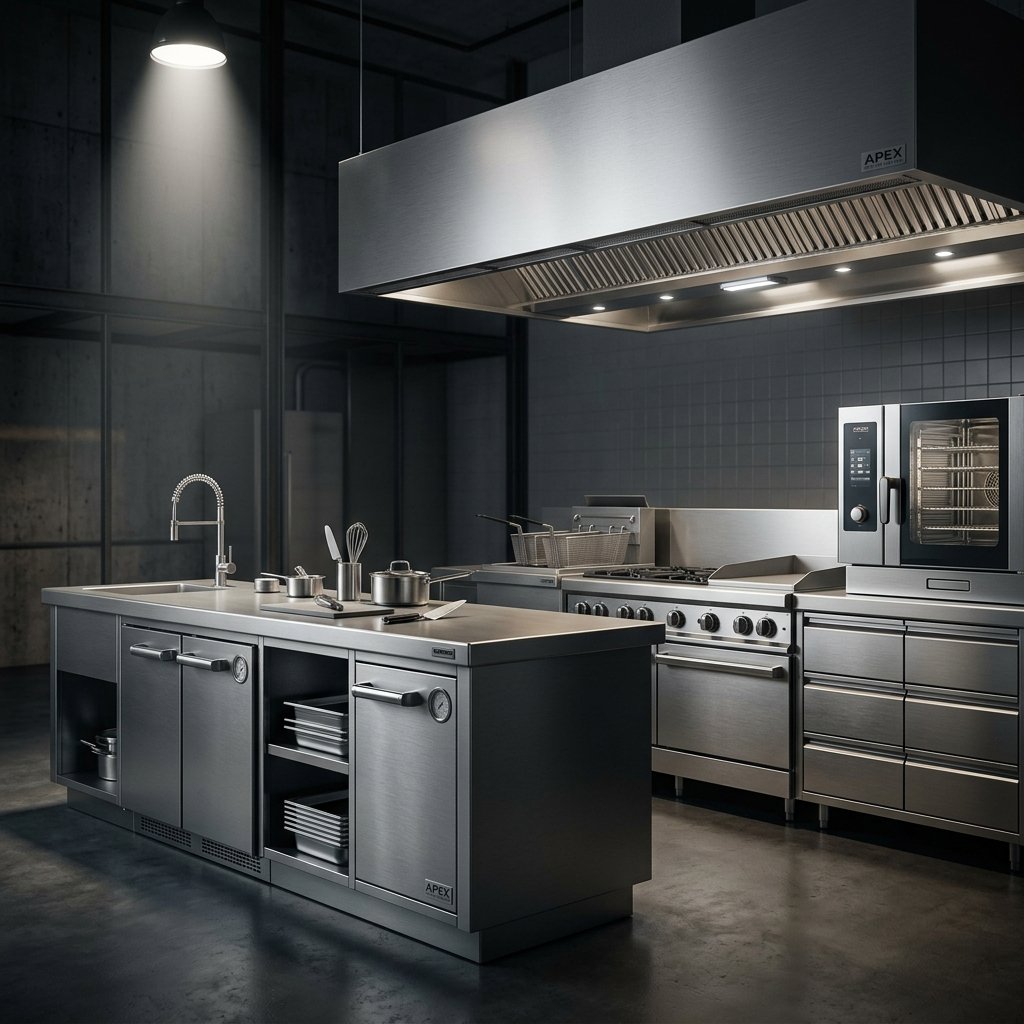
If you've compared quotes from stainless steel fabricators, you've seen AISI 304 and AISI 316 mentioned side by side — often with a noticeable price gap. Both are austenitic, food-safe grades, but they're not interchangeable in every zone of a commercial kitchen.
The Short Answer
- AISI 304 is the workhorse: excellent general corrosion resistance, great formability, and the right choice for the vast majority of kitchen surfaces.
- AISI 316 adds molybdenum, which dramatically improves resistance to chlorides — salts, coastal air, and harsh cleaning chemicals.
Zone-by-Zone Guidance
Dry prep & storage zones
Worktables, racks, and cabinets in dry areas perform perfectly in 304. There's no benefit paying a premium for 316 here.
Wash areas & dish landing
Constant moisture and detergent exposure makes 316 a worthwhile upgrade for sinks, troughs, and dish-landing tables — especially where water is hard or chlorinated.
Coastal & chemical-exposed sites
Kitchens within a few kilometres of the coastline, or sites using aggressive sanitisers daily, benefit from 316 on exposed exterior panels and fasteners to avoid tea-staining over time.
What This Means for Your Budget
Rather than upgrading an entire kitchen to 316, most projects get the best life-cycle value from a hybrid specification: 304 for general fabrication, 316 for the zones that punish steel. Your fabricator should be able to justify the grade per line item — if they can't, ask.
Planning a kitchen build? Request a quote and our engineers will propose the grade mix for each zone of your layout.